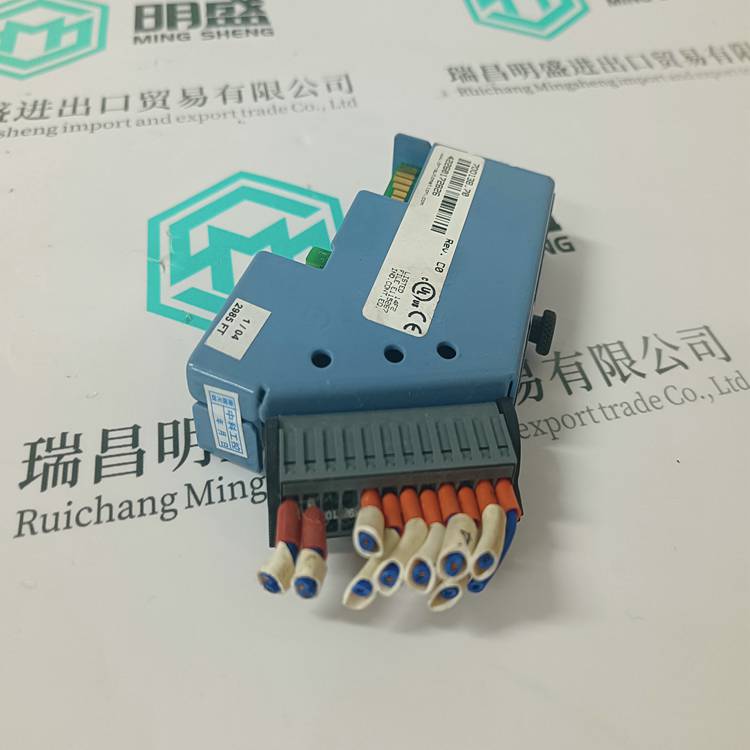
 CMA51-2 GVT3605976 CMA51 模拟量输出控制卡
¥6973.00
61431390C NINT-73C 61431390 主电路接口模块
¥6973.00
CMA51-2 GVT3605976 CMA51 模拟量输出控制卡
¥6973.00
61431390C NINT-73C 61431390 主电路接口模块
¥6973.00

 CMA51-2 GVT3605976 CMA51 模拟量输出控制卡
¥6973.00
61431390C NINT-73C 61431390 主电路接口模块
¥6973.00
CMA51-2 GVT3605976 CMA51 模拟量输出控制卡
¥6973.00
61431390C NINT-73C 61431390 主电路接口模块
¥6973.00
| CAO10 P72123-4-0788723 CAO 10 16通道模拟输出模块 |
| CAO10 P72123-4-0788723 CAO 10 16通道模拟输出模块 |
| CAO10 P72123-4-0788723 CAO 10 16通道模拟输出模块 |
| CAO10 P72123-4-0788723 CAO 10 16通道模拟输出模块 |
| CAO10 P72123-4-0788723 CAO 10 16通道模拟输出模块 |
–VMEbus中断处理程序
–处理器间通信的全球CSR
–DMA用于快速本地存储器-VMEbus传输(A16/A24/A32,
D16/D32(D16/D2/D64 BLT)
❏ 开关和发光二极管(LED)
–两个按钮开关(中止和复位)
–八个指示灯(故障、状态、运行、SCON、LAN、保险丝、SCSI和VME)
规格
MVME162的一般规格如表1-1所示。
注:参考以下章节“高架道路的特殊注意事项
温度运行”和MVME162中的“冷却要求”
嵌入式控制器用户手册。
表1-1.MVME162规格
特性和规格
功率要求
(带PROM;不带IPs)
+5V(±5%),典型为3.5 A,为4.5 A。
+12 Vdc(±5%)、100 mA()
-12 Vdc(±5%)、100 mA()
工作温度:0°至70°C,强制空气冷却的出口空气(见注释)
储存温度-40°C至+85°C
相对湿度5%至90%(非冷凝)
物理尺寸
带夹层的PC板
仅模块
身高
深度
厚
带连接器的PC板
和前面板
身高
深度
厚
双高VMEboard
9.187英寸(233.35毫米)
6.299英寸(160.00毫米)
0.662英寸(16.77毫米)
10.309英寸(261.85毫米)
7.4英寸(188毫米)
0.80英寸(20.32毫米)
介绍
MVME162IG/D2 1-7
1.
高温运行的特殊注意事项
以下信息适用于具有应用程序的用户
MVME162,其将经受高温。
MVME162使用商用级设备。因此,它可以在
环境空气温度从0°C到70°C。有许多
上的组件所看到的影响环境温度的因素
MVME162:进气温度;气流特性;数量、类型和
IndustryPack(IP)模块的位置;相邻板的功耗
在系统中;等
对MVME945中的MVME162-23进行了温度分布
12插槽VME机箱。该板上装有一个GreenSpring IP Dual
P/T模块(位置a)和三个GreenSpring IP-488模块(位置b,
c、 和d)。每侧相邻安装一个25瓦负载板
测试板的。出口空气速度约为200 LFM
在MVME162和IP双P/T模块之间。在这些
在这种情况下,观察到入口和出口空气之间的温度升高10℃。在70度
C出口空气温度(60°C入口空气),设备的连接温度
计算MVME162(根据测量的外壳温度),并
不超过100°C。
注意:对于高温操作,用户必须执行
类似的测量和计算,以确定
任何特定环境都存在营业利润。
以下是用户可以采取的一些步骤,以帮助提升
可能的温度操作:
1.将MVME162板放置在机箱中,以获得气流
电路板的组件侧。
2.避免将高功耗板放置在
MVME162。
3.仅使用低功率IP模块。IP模块的位置
是位置a(J2和J3)和位置d(J18和J19)。
– VMEbus interrupt handler
– Global CSR for interprocessor communications
– DMA for fast local memory - VMEbus transfers (A16/A24/A32,
D16/D32 (D16/D32/D64 BLT)
❏ Switches and Light-Emitting Diodes (LEDs)
– Two pushbutton switches (ABORT and RESET)
– Eight LEDs (FAIL, STAT, RUN, SCON, LAN, FUSE, SCSI, and VME)
Specifications
General specifications for the MVME162 are listed in Table 1-1.
NOTE: Refer to the following section on “Special Considerations for Elevated
Temperature Operation,” and to “Cooling Requirements” in the MVME162
Embedded Controller User’s Manual.
Table 1-1. MVME162 Specifications
Characteristics Specifications
Power requirements
(with PROM; without IPs)
+5V (± 5%), 3.5 A typical, 4.5 A max.
+12 Vdc (± 5%), 100 mA (max.)
-12 Vdc (± 5%), 100 mA (max.)
Operating temperature 0° to 70° C exit air with forced air cooling (see NOTE)
Storage temperature -40° to +85° C
Relative humidity 5% to 90% (noncondensing)
Physical dimensions
PC board with mezzanine
module only
Height
Depth
Thickness
PC board with connectors
and front panel
Height
Depth
Thickness
Double-high VMEboard
9.187 inches (233.35 mm)
6.299 inches (160.00 mm)
0.662 inch (16.77 mm)
10.309 inches (261.85 mm)
7.4 inches (188 mm)
0.80 inch (20.32 mm)
Introduction
MVME162IG/D2 1-7
1
Special Considerations for Elevated Temperature Operation
The following information is for the user who has an application for the
MVME162 which will subject it to high temperature.
The MVME162 uses commercial grade devices. Therefore, it can operate in an
environment with ambient air temperature from 0° C to 70° C. There are many
factors that affect the ambient temperature seen by components on the
MVME162: inlet air temperature; air flow characteristics; number, types, and
locations of IndustryPack (IP) modules; power dissipation of adjacent boards
in the system; etc.
A temperature profile was performed for the MVME162-23 in an MVME945
12-slot VME chassis. This board was loaded with one GreenSpring IP-Dual
P/T module (position a) and three GreenSpring IP-488 modules (positions b,
c, and d). One twenty-five watt load board was installed adjacent to each side
of the board under test. The exit air velocity was approximately 200 LFM
between the MVME162 and the IP-Dual P/T module. Under these
circumstances, a 10° C rise between the inlet and exit air was observed. At 70°
C exit air temperature (60° C inlet air), the junction temperatures of devices on
the MVME162 were calculated (from the measured case temperatures) and do
not exceed 100° C.
Caution For elevated temperature operation, the user must perform
similar measurements and calculations to determine what
operating margin exists for any specific environment.
The following are some steps that the user can take to help make elevated
temperature operation possible:
1. Position the MVME162 board in the chassis for maximum airflow over the
component side of the board.
2. Avoid placing boards with high power dissipation adjacent to the
MVME162.
3. Use low power IP modules only. The preferred locations for IP modules
are position a (J2 and J3) and position d (J18 and J19).
 在线问
在线问